

ASHRAE Regina Chapter Meeting
Designing for Northern, Remote, and Arctic Communities
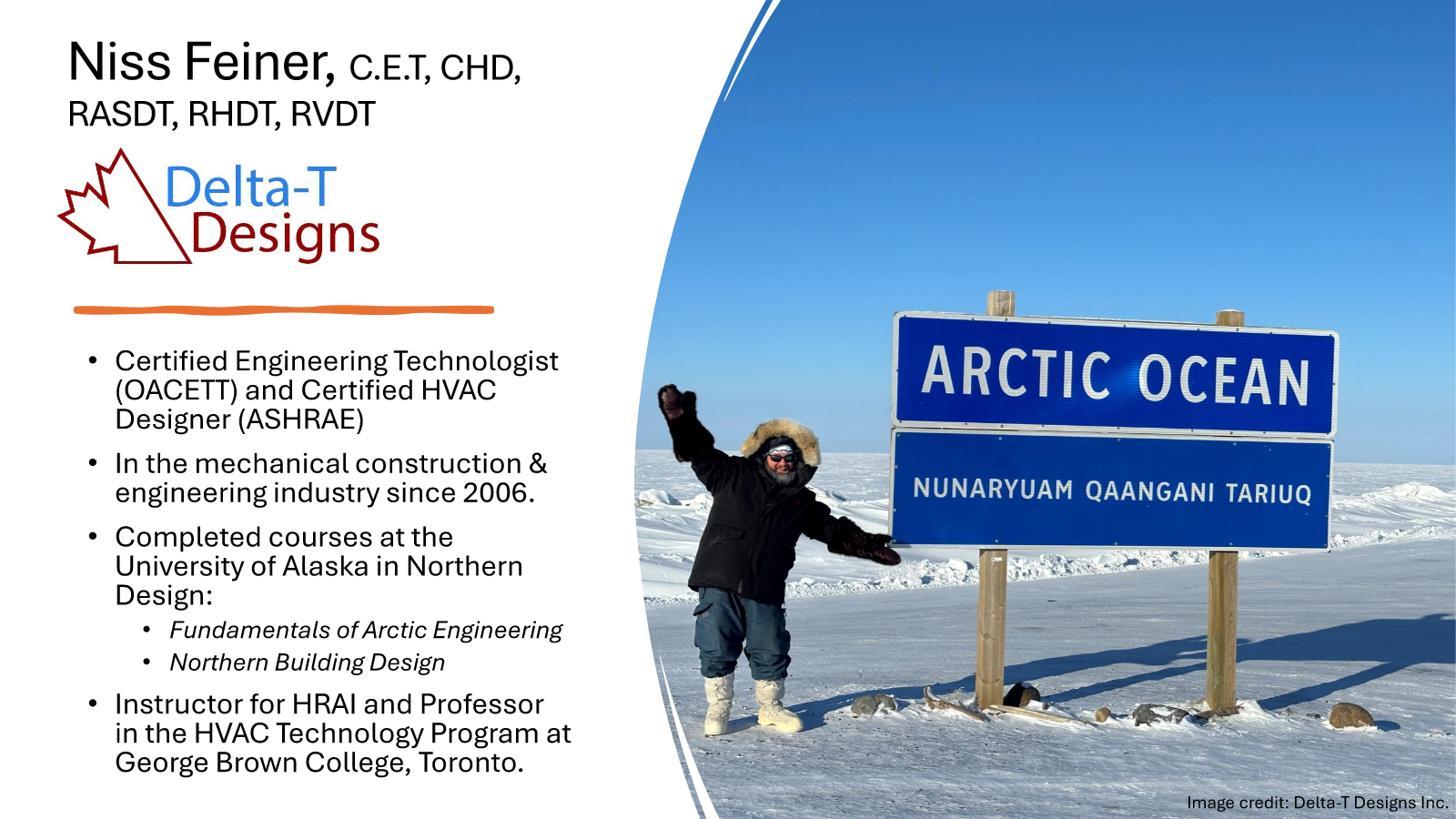
ASHRAE Distinguished Lecturer: Niss Feiner
Buildings designed for northern, remote, and Arctic communities face challenges that are fundamentally different from those encountered in southern urban environments. Extreme cold, prolonged darkness, thaw-sensitive permafrost, limited transportation access, diesel-generated electricity, and unique water and wastewater infrastructure systems significantly influence mechanical and building design decisions.
This presentation introduces the climatic, geographic, and infrastructural realities that shape building systems in Canada’s North. Using ASHRAE climate data and real project examples, attendees will examine how extreme temperature differentials, limited fuel supply chains, and high electricity costs affect heating, ventilation, and energy strategy. Topics include ventilation preheat requirements, combustion air implications, frozen flue-gas risk, tank-based potable water systems, tank-based sewage holding and disposal, utilidor infrastructure, and the thermal protection of permafrost through raised foundations and thermosyphon systems.
Beyond technical considerations, the lecture explores the logistical and economic constraints of remote construction, including sealift supply chains, ice roads, long procurement timelines, and infrastructure replacement challenges. Attendees will gain insight into how limited access and high material costs demand long-term forecasting, resilience, and simplified system strategies.
Importantly, the presentation also addresses the cultural and governance context in which engineering work occurs. Northern communities are home to diverse Indigenous Nations with treaty and land claim agreements that directly affect project approval and execution. The lecture highlights the importance of cultural awareness, engagement with regional governing bodies operating under land claim agreements, and sensitivity to sustenance lifestyles and local priorities. Historical examples—including the legacy of resource extraction and large-scale environmental remediation efforts—illustrate why trust, transparency, and environmental stewardship are central to engineering practice in these regions.
Attendees will leave with:
- A practical understanding of how Arctic climate conditions impact HVAC and plumbing system design
- Insight into off-grid energy realities and diesel-dependent electrical systems
- Strategies for protecting permafrost and maintaining infrastructure in extreme cold
- Awareness of logistical planning requirements unique to remote regions
- A framework for culturally informed engineering engagement in northern communities
This session challenges conventional southern-based design assumptions and equips engineers, architects, contractors, and policy makers with the contextual understanding necessary to design systems that are resilient, respectful, and sustainable in some of the most demanding environments in North America.